
Cosmetic · Placeholder catalog data
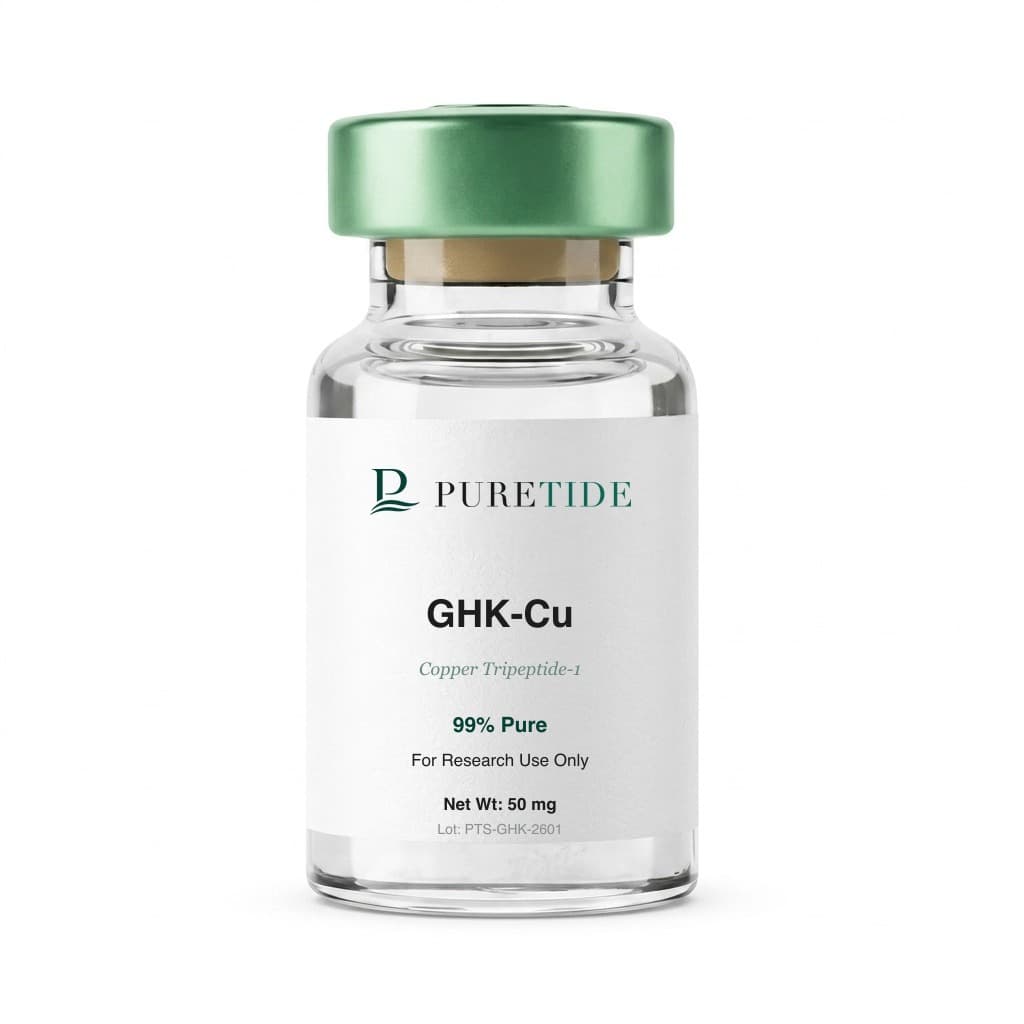
GHK-Cu
Also known as Copper Tripeptide-1
A naturally occurring copper-binding tripeptide studied extensively in models of fibroblast activity, collagen synthesis, and skin regeneration.
190 credits
Paid from your credit pool at checkout. Bulk quantities discount automatically.
Available variants
Pricing and fulfillment information is placeholder data.
| Amount | SKU | Credits | MSRP | Availability | Margin estimate |
|---|---|---|---|---|---|
| 50 mg | PTS-GHK-50 | 38 credits | $45 | Ready | 16% estimate |
| 100 mg | PTS-GHK-100 | 32 credits | $69 | Ready | 54% estimate |
Margin estimate treats 1 credit as $1 and compares estimated wholesale credit cost with placeholder MSRP. It excludes shipping, taxes, and other costs.
Buy more, save more
Quantity breaks apply per line item and are deducted automatically at checkout.
| Quantity per line | Discount | Example (50 mg unit) |
|---|---|---|
| 10+ units | 5% off | 10 × 38 credits → 361 credits |
| 25+ units | 10% off | 25 × 38 credits → 855 credits |
| 50+ units | 15% off | 50 × 38 credits → 1,615 credits |
| 100+ units | 20% off | 100 × 38 credits → 3,040 credits |
Specifications
- CAS
- 89030-95-5
- Formula
- C14H22CuN6O4
- Molecular weight
- 401.91 g/mol
- Sequence
- GHK (glycyl-L-histidyl-L-lysine) · Cu²⁺
- Purity
- ≥99%
- Appearance
- Deep blue lyophilized powder
- Storage
- Store lyophilized at 2–8 °C, protected from light
Quality record
COA status
COA listedLot PTS-GHK-2607
Placeholder reference. Verify the active lot before ordering.
Research background
GHK is a tripeptide first identified in human plasma as a factor influencing fibroblast and hepatocyte activity. When complexed with copper(II), the GHK-Cu complex has been studied as a modulator of extracellular matrix remodeling, antioxidant response, and gene expression programs related to tissue repair.
Published transcriptomic work has reported GHK-Cu influence on thousands of human genes involved in the inflammatory cascade, DNA repair, and collagen and glycosaminoglycan synthesis in dermal fibroblast models.
GHK-Cu is used in laboratory research as a reference copper-peptide complex. It is not a cosmetic ingredient, not a drug, and is not supplied for human application.
Mechanism: Literature describes copper ion chelation and delivery, fibroblast activation, decorin and collagen gene upregulation, and antioxidant pathway modulation in dermal and connective tissue models.
Research use only
For research use only. Not for human or veterinary use.