
Longevity · Placeholder catalog data
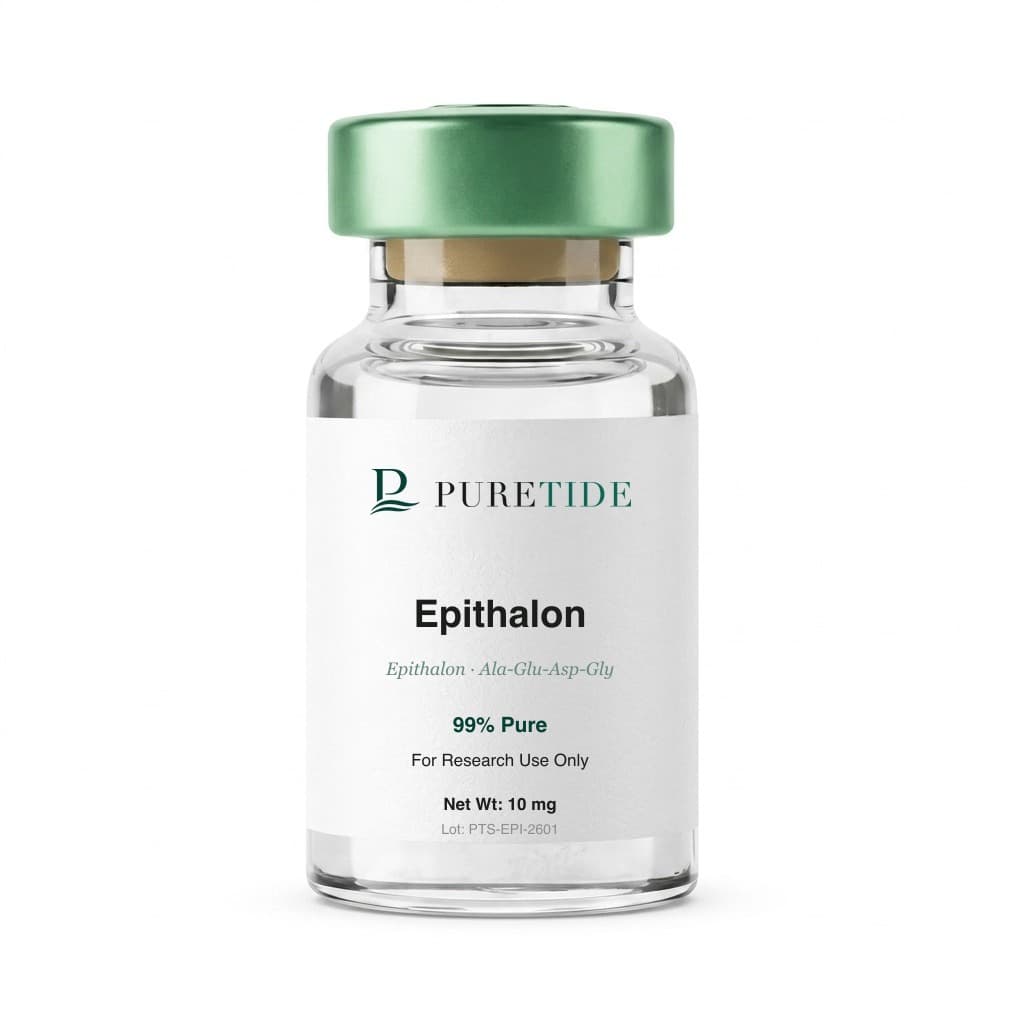
Epithalon
Also known as Epithalon · Ala-Glu-Asp-Gly
A short tetrapeptide first characterized in Russian longevity research as a putative bioregulator of pineal function and telomerase activity in preclinical models.
130 credits
Paid from your credit pool at checkout. Bulk quantities discount automatically.
Available variants
Pricing and fulfillment information is placeholder data.
| Amount | SKU | Credits | MSRP | Availability | Margin estimate |
|---|---|---|---|---|---|
| 10 mg | PTS-EPI-10 | 26 credits | $45 | Ready | 42% estimate |
| 20 mg | PTS-EPI-20 | 45 credits | $79 | Ready | 43% estimate |
Margin estimate treats 1 credit as $1 and compares estimated wholesale credit cost with placeholder MSRP. It excludes shipping, taxes, and other costs.
Buy more, save more
Quantity breaks apply per line item and are deducted automatically at checkout.
| Quantity per line | Discount | Example (10 mg unit) |
|---|---|---|
| 10+ units | 5% off | 10 × 26 credits → 247 credits |
| 25+ units | 10% off | 25 × 26 credits → 585 credits |
| 50+ units | 15% off | 50 × 26 credits → 1,105 credits |
| 100+ units | 20% off | 100 × 26 credits → 2,080 credits |
Specifications
- CAS
- 307297-39-8
- Formula
- C14H22N4O9
- Molecular weight
- 390.35 g/mol
- Sequence
- AEDG
- Purity
- ≥99%
- Appearance
- White lyophilized powder
- Storage
- Store lyophilized at −20 °C, protected from light and moisture
Quality record
COA status
COA listedLot PTS-EPI-2607
Placeholder reference. Verify the active lot before ordering.
Research background
Epithalon is a synthetic tetrapeptide (Ala-Glu-Asp-Gly) derived from the larger protein Epithalamin, originally isolated from bovine pineal gland. Research from the St. Petersburg Institute of Bioregulation and Gerontology and collaborators has investigated the peptide across models of aging, pineal function, and chromatin biology.
Published work has examined effects on telomerase activity in somatic human cells, melatonin rhythms, and age-associated biomarkers in rodent longevity studies.
The peptide is supplied as a research reagent for investigation of short-peptide bioregulation and aging biology. It is not a therapeutic.
Mechanism: Literature describes Epithalon as a putative bioregulator influencing chromatin condensation, telomerase activity, and transcriptional programs related to pineal and circadian function in preclinical models.
Research use only
For research use only. Not for human or veterinary use.