
Repair & Recovery · Placeholder catalog data
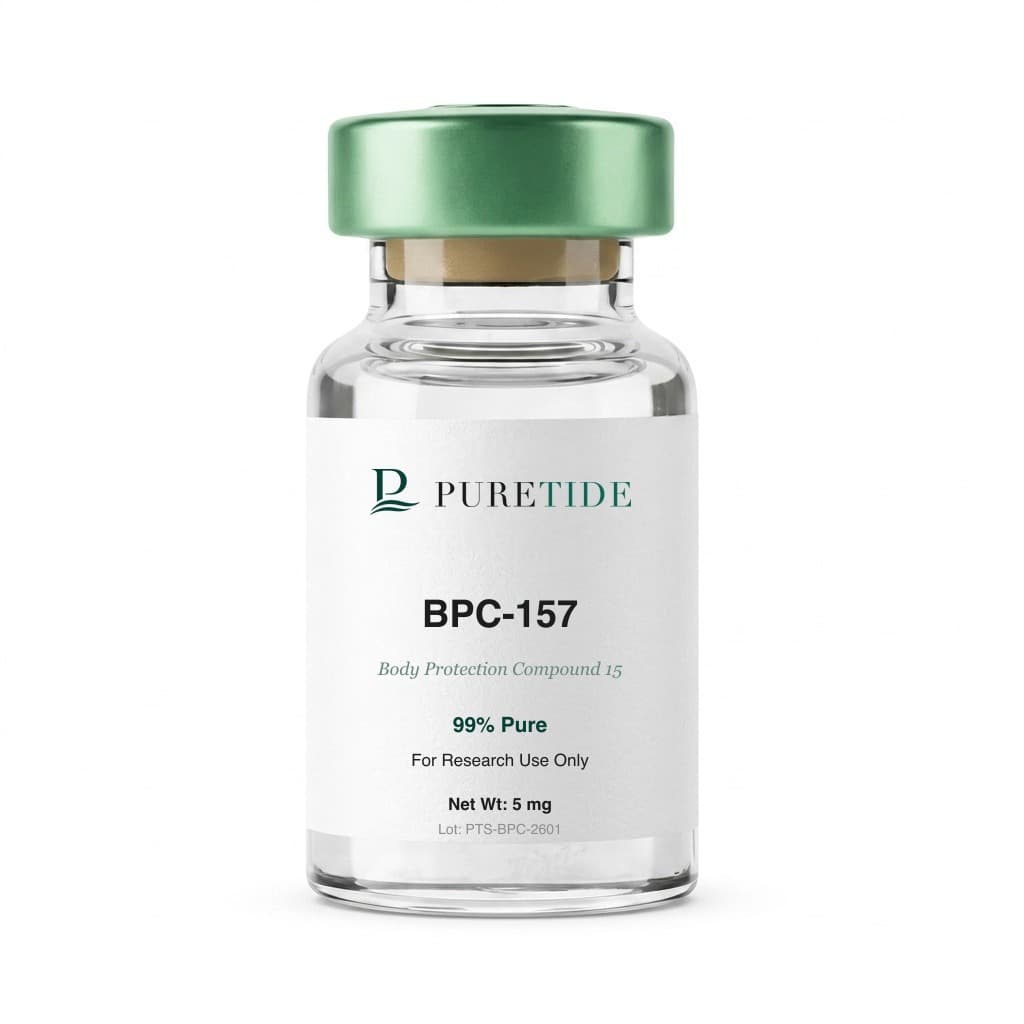
BPC-157
Also known as Body Protection Compound 15
A pentadecapeptide fragment derived from a protective protein found in gastric juice. Widely studied in preclinical models of tissue repair, gut mucosal integrity, and angiogenic signaling.
130 credits
Paid from your credit pool at checkout. Bulk quantities discount automatically.
Available variants
Pricing and fulfillment information is placeholder data.
| Amount | SKU | Credits | MSRP | Availability | Margin estimate |
|---|---|---|---|---|---|
| 5 mg | PTS-BPC-5 | 26 credits | $45 | Ready | 42% estimate |
| 10 mg | PTS-BPC-10 | 32 credits | $65 | Ready | 51% estimate |
Margin estimate treats 1 credit as $1 and compares estimated wholesale credit cost with placeholder MSRP. It excludes shipping, taxes, and other costs.
Buy more, save more
Quantity breaks apply per line item and are deducted automatically at checkout.
| Quantity per line | Discount | Example (5 mg unit) |
|---|---|---|
| 10+ units | 5% off | 10 × 26 credits → 247 credits |
| 25+ units | 10% off | 25 × 26 credits → 585 credits |
| 50+ units | 15% off | 50 × 26 credits → 1,105 credits |
| 100+ units | 20% off | 100 × 26 credits → 2,080 credits |
Specifications
- CAS
- 137525-51-0
- Formula
- C62H98N16O22
- Molecular weight
- 1419.53 g/mol
- Sequence
- GEPPPGKPADDAGLV
- Purity
- ≥99%
- Appearance
- White lyophilized powder
- Storage
- Store lyophilized at −20 °C, protected from light and moisture
Quality record
COA status
COA listedLot PTS-BPC-2607
Placeholder reference. Verify the active lot before ordering.
Research background
BPC-157 is a synthetic 15-amino-acid sequence corresponding to a fragment of a protein isolated from human gastric juice. Since the early 1990s, a large body of preclinical literature from Sikiric and colleagues has investigated the peptide across models of tendon, ligament, muscle, and gut tissue repair.
Published in vitro and in vivo work has examined BPC-157 in the context of fibroblast migration, collagen organization, and nitric oxide signaling, alongside models of inflammatory bowel injury, anastomotic healing, and tendon-to-bone reattachment.
BPC-157 remains under active preclinical investigation and is of interest as a research tool for interrogating angiogenic and cytoprotective pathways. It is not an approved therapeutic in any jurisdiction.
Mechanism: Literature describes interactions with the nitric oxide system, VEGFR2 internalization, and growth-factor-mediated angiogenic signaling in preclinical models.
Research use only
For research use only. Not for human or veterinary use.